🇹🇷 Turkey’s 20-Year Tax Advantage: A Serious Opportunity for International Investors
Turkey's new 20-year tax exemption on qualifying foreign-source income could reshape international tax residency planning. JURIS Global examines eligibility, tax benefits and how Turkish citizenship and real estate investment may support a long-term relocation strategy.

Could Turkey become one of the most attractive tax residency destinations for internationally mobile individuals?
Turkey's new tax framework offers qualifying individuals who become Turkish tax residents a 20-year exemption from Turkish personal income tax on foreign-source income. For entrepreneurs, investors and families with international assets, this represents an opportunity worth considering.
What makes this opportunity attractive?
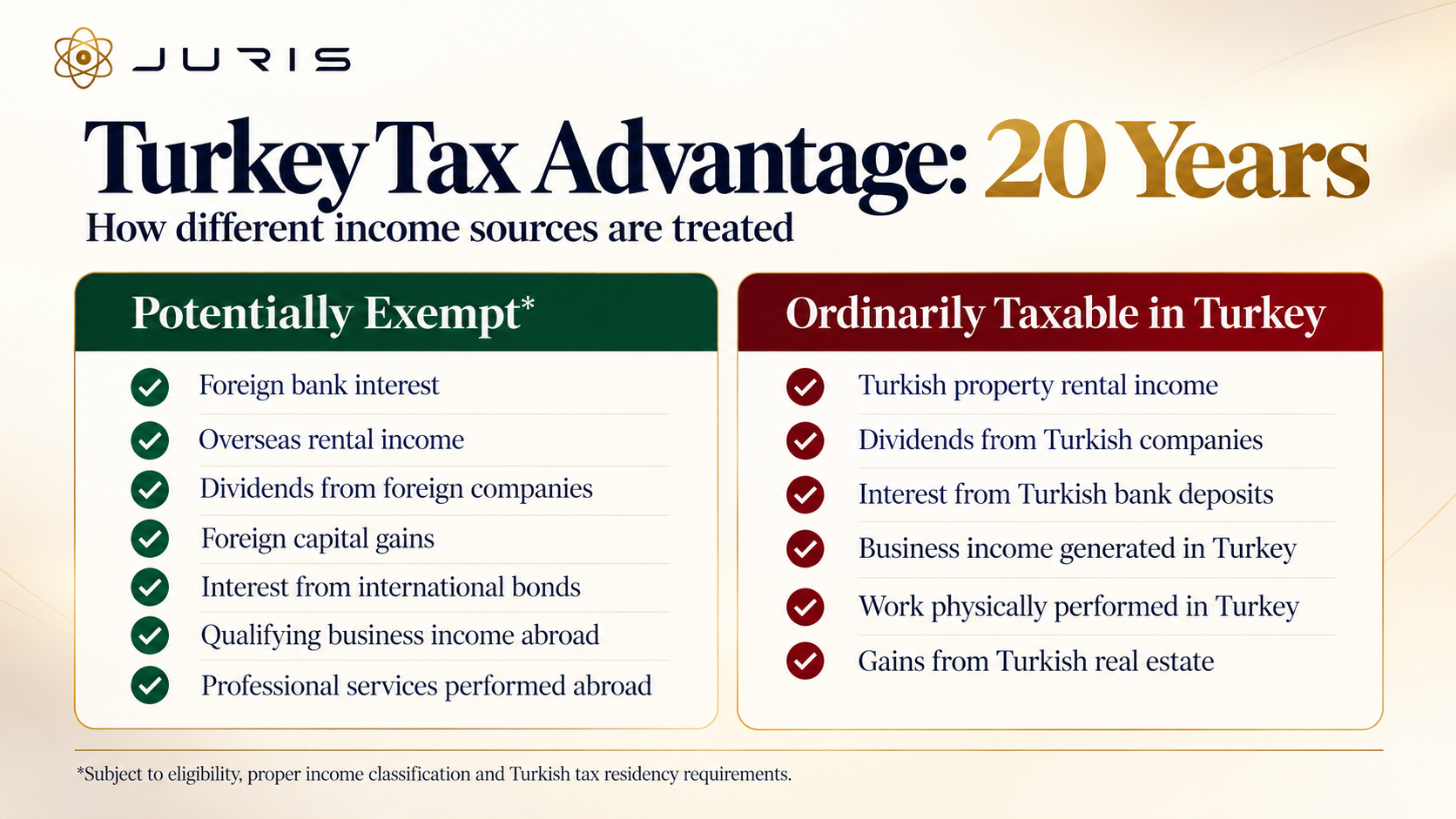
Imagine spending some time in Istanbul or along the Turkish Riviera while benefiting from 20 years of Turkish income tax exemption on qualifying foreign-source income, provided you meet the tax residency requirements. Under the new regime, qualifying foreign-source income may be exempt from Turkish personal income tax for two decades. The exemption can cover: - Foreign dividends and investment income. - Rental income from overseas properties. - Interest from foreign financial assets. -Qualifying foreign capital gains and business income. Exempt foreign income also does not need to be included in the Turkish annual income tax return. Another potential advantage is a preferential 1% inheritance tax rate on qualifying inheritances received during the exemption period.
Who qualifies?
Applicants must become Turkish tax residents, have had no Turkish domicile or disqualifying tax liabilities during the previous three calendar years, and obtain an exemption certificate from the Turkish tax authorities. For individuals establishing tax residency in 2026, the application deadline is generally 31 December 2026, extended to 28 February 2027 for those becoming resident in November or December. Income generated in Turkey remains subject to ordinary taxation, and the exemption does not eliminate taxes that may be due in other countries.