4 Passports Every European Should Consider for 2027
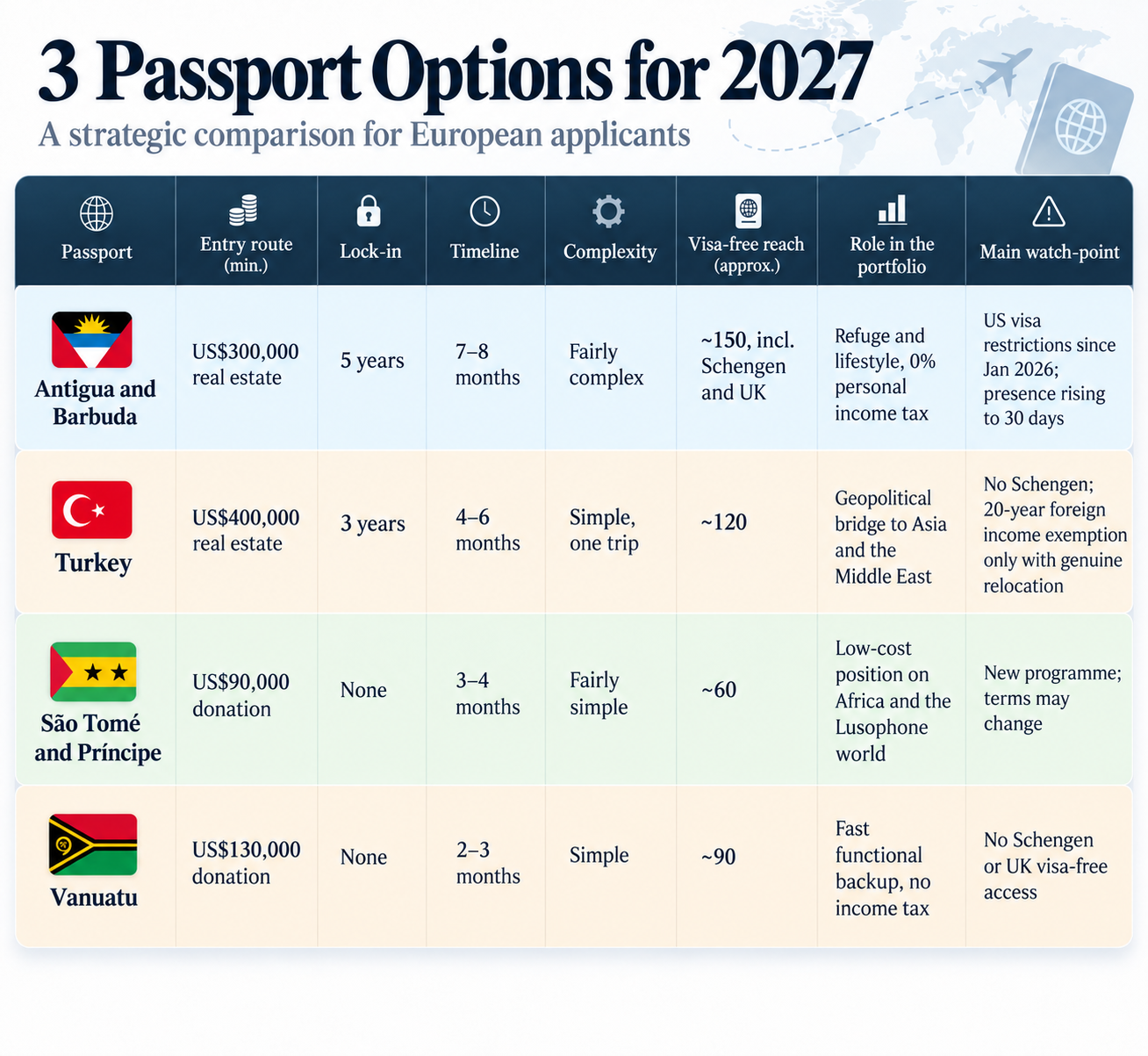
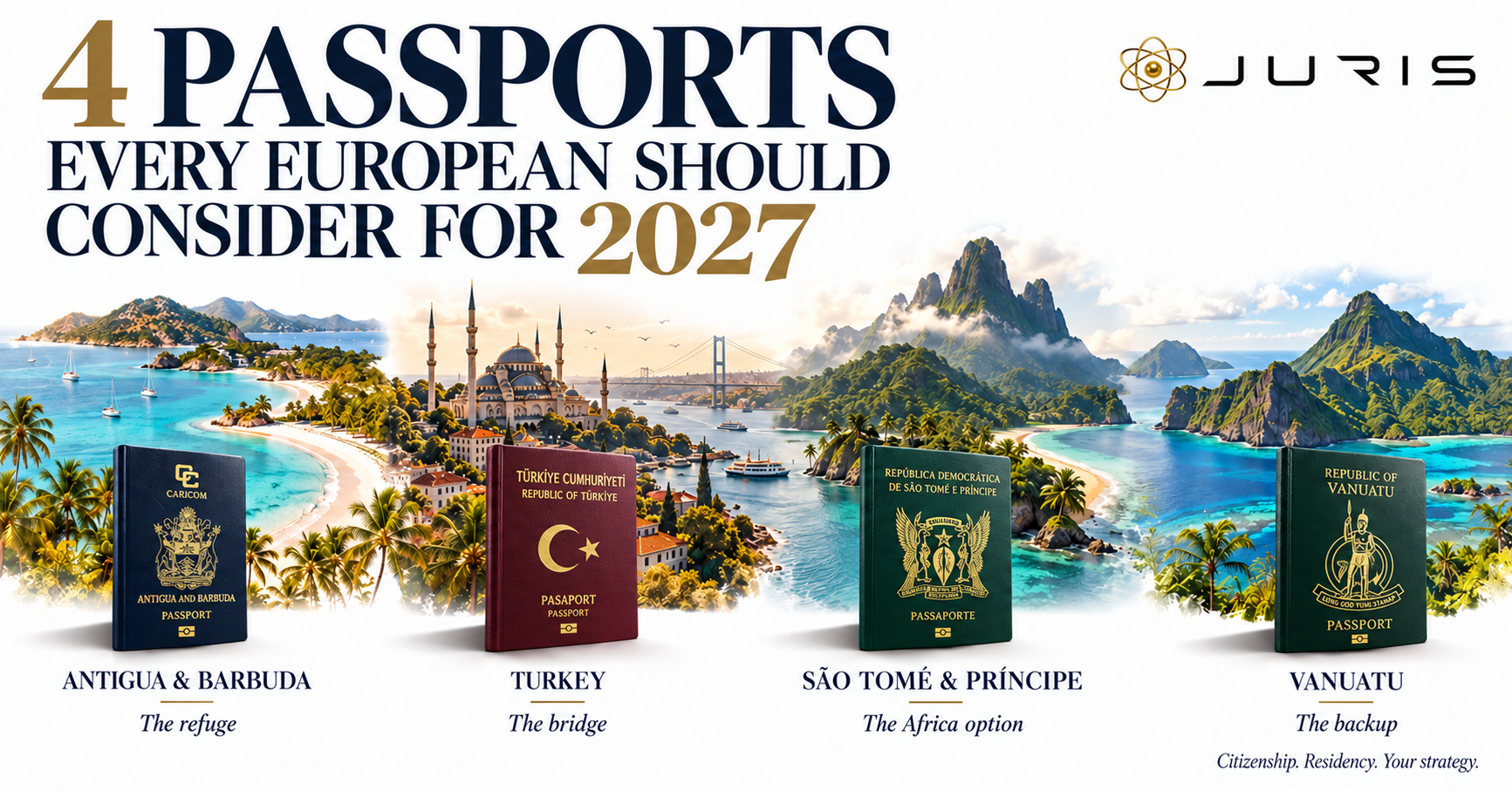
A European passport already provides exceptional mobility. But in 2027, the real value of a second citizenship is optionality. We compare Antigua and Barbuda, Turkey, São Tomé and Príncipe and Vanuatu, four passports serving very different roles: refuge, geopolitical positioning, exposure to Africa and a fast functional backup.
Why a European needs a second passport
A European passport is one of the strongest travel documents in the world. That is exactly why many Europeans never think about a second one - and why they are underprepared if the environment around them changes. The question for 2027 is not mobility. It is optionality. Rising taxation, regulatory tightening, geopolitical fragmentation and a more volatile European political landscape all point the same way: the families and entrepreneurs who will move most freely over the next decade are the ones holding more than one flag. A well-built portfolio does three jobs. It gives you a refuge if you ever need to leave, a bridge into regions where a European passport is not always the best calling card, and a long-term position in places that are undervalued today. The four programmes below each play a different role.
1. Antigua and Barbuda - the Refuge passport
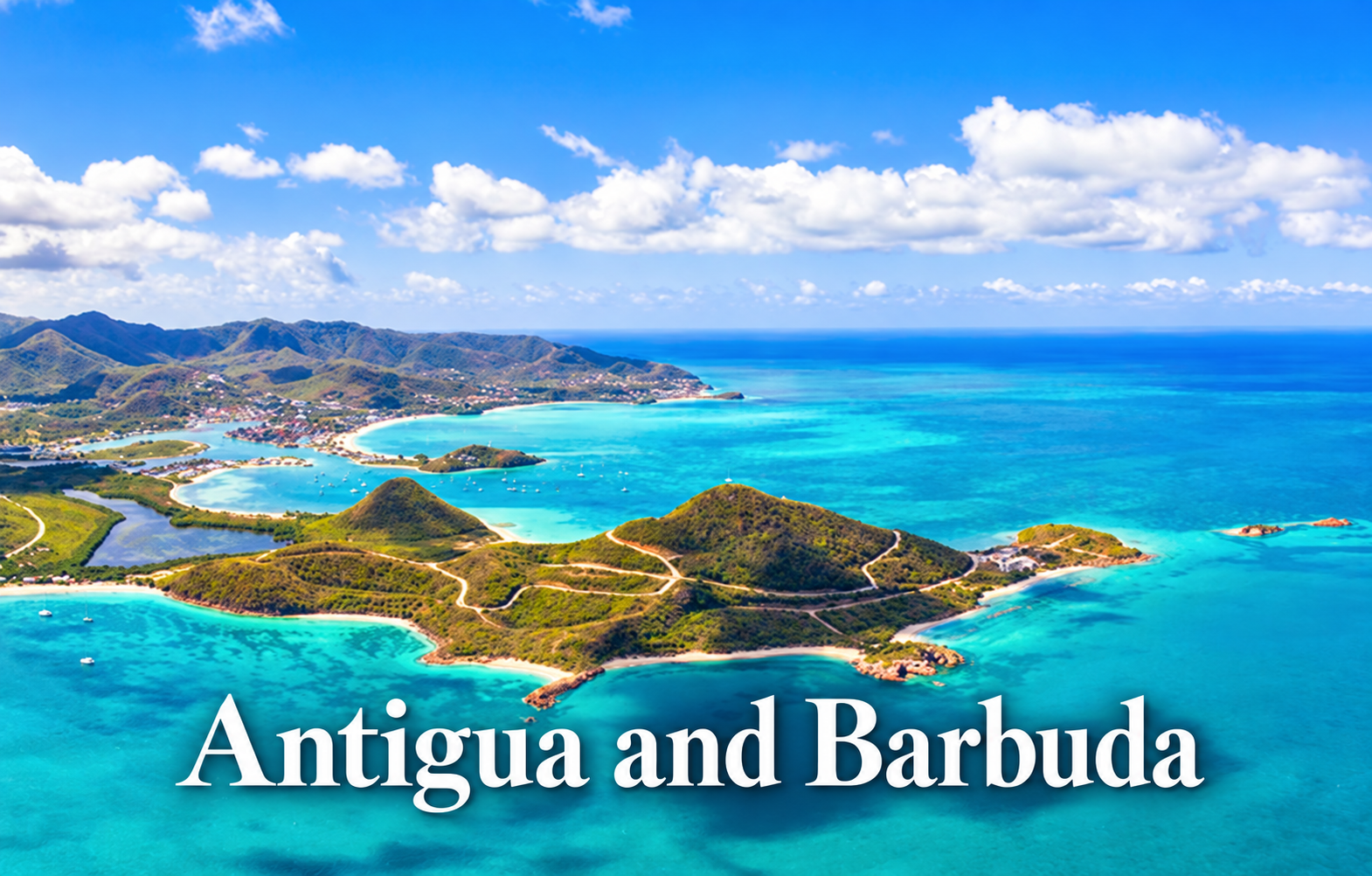
- Route: approved real estate from US$300,000, held for at least 5 years, plus government and due diligence fees. A donation route via the National Development Fund starts at US$230,000 for a family of up to four. - Timeline and complexity: around 7-8 months. A fairly complex file - approved project, real estate due diligence and extensive documentation - but the result is the strongest passport of the four. Antigua and Barbuda is a fully independent nation and a member of the British Commonwealth, with a legal system rooted in English common law. That combination - sovereignty, stability and familiar institutions - is exactly what you want from a Plan B. - Regional free movement. As a protocol member of the OECS Economic Union, Antigua gives its citizens the right to live, work and do business indefinitely in the other participating states - Dominica, Grenada, St Kitts and Nevis, St Lucia, St Vincent and the Grenadines and Montserrat - with no work permit. One passport, a whole region. - More than a travel document. Antigua is not just a functional passport for visa-free travel to around 150 destinations, including the Schengen Area and the UK. It is a genuine refuge: a place you can actually move to with your family if Europe becomes less comfortable. - The tax angle. If a client ever decides to relocate, Antigua is even better than a territorial system: personal income tax was abolished in 2016. There is no tax on worldwide personal income, no capital gains tax, no wealth tax and no inheritance tax. A separate tax residency programme exists for those who want to formalise it. Important: holding the passport alone changes nothing for tax - a genuine move of tax residence, properly planned, is required. - The lifestyle. 365 beaches, one for every day of the year, and a life lived barefoot. For many families, the passport is the excuse; the island is the reason.