🇧🇷 Brazil at a Crossroads: Could the 2026 Elections Change Residency Rules for Foreign Investors?
Brazil's 2026 presidential election could reshape the country's immigration and investment landscape. What could change for foreign investors, existing residents and those considering residency through real estate or business investment? JURIS Global examines the political developments, regulatory risks and implications for 2027.
JURIS Editorial
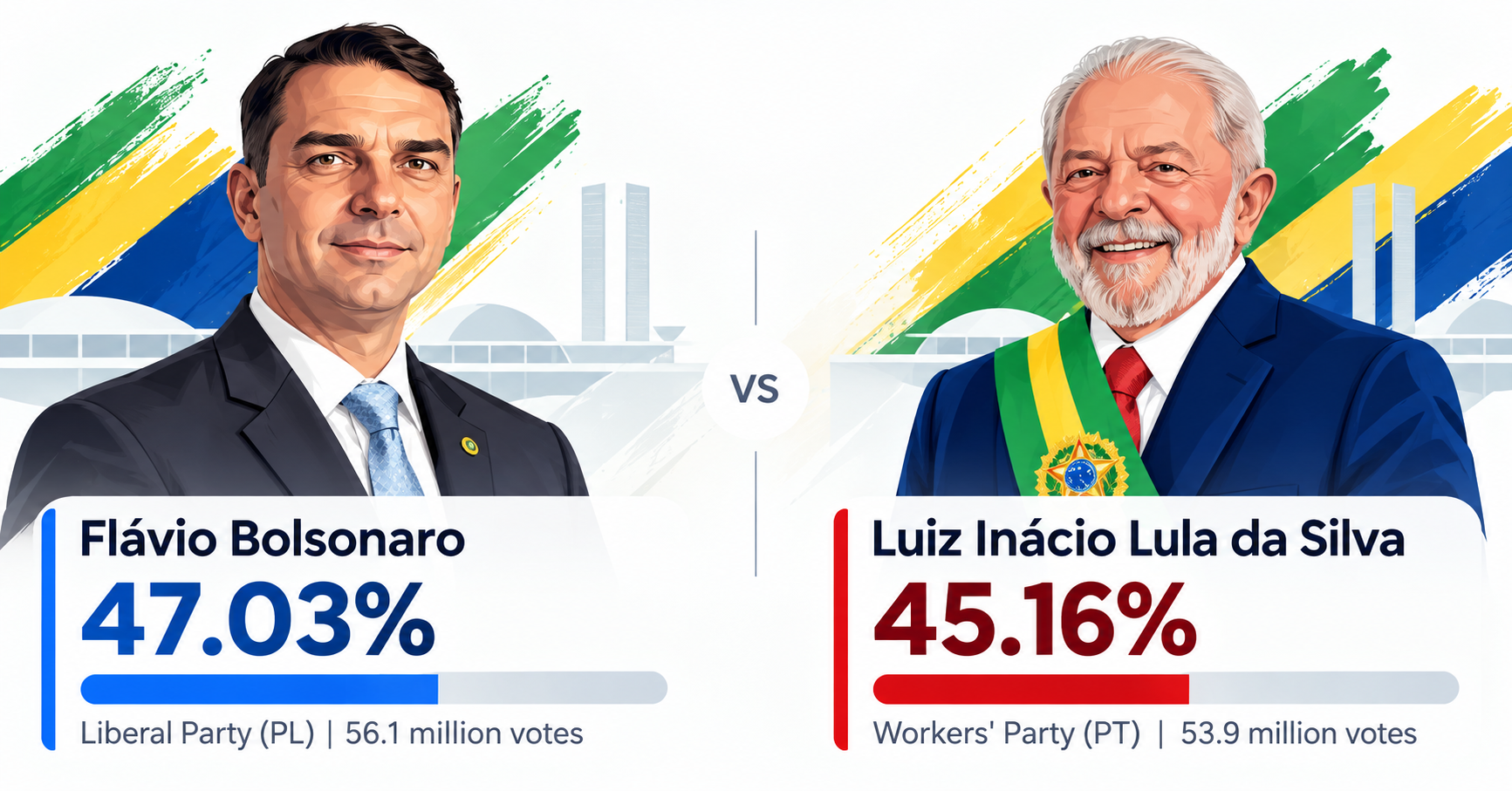
Brazil is entering a decisive political moment. The presidential election has produced a closely contested race between two very different political figures, raising questions about the country's economic direction, foreign investment policies and immigration framework.
For international investors, entrepreneurs and individuals considering Brazil as a second home, one question deserves particular attention:
Could the next Brazilian government change the rules for obtaining or maintaining residency?
The answer is that changes are possible, but it is important to distinguish actual legislative proposals from political speculation.
1. What happened in Brazil's elections?
On 4 October 2026, Brazilians voted in the first round of their presidential election.
Neither candidate secured an absolute majority, meaning the election will be decided in a second round on 25 October 2026.
Flávio Bolsonaro, son of former President Jair Bolsonaro, is running against incumbent President Lula. Their political platforms differ in areas such as taxation, public spending, economic regulation and the role of the state.
The incoming Congress will also matter. Members elected on 4 October will begin their legislative terms in February 2027, potentially affecting the government's ability to introduce reforms.
For investors, the significance of this election goes beyond who occupies the presidential palace.
It concerns the stability and direction of Brazil's regulatory environment.
2. Could the election affect residency permits?
Brazil's immigration system is based primarily on Migration Law No. 13,445/2017, which provides legal pathways for foreign nationals to live, work, invest and reunite with family members in Brazil.
A change of government does not automatically invalidate existing residence permits.
However, a new administration could propose changes to eligibility requirements, investment thresholds, administrative procedures or the way immigration rules are enforced.
The distinction is important: there is currently no verified announcement that Brazil will cancel investor residency permits or suspend its principal investment-based residence programmes following the election.
Nevertheless, immigration reform is already being discussed in Congress.
In February 2026, Congressman Luiz Philippe de Orleans e Bragança, a member of the Liberal Party, introduced Bill PL 622/2026.
The proposal would restrict the entry and granting of visas or residency permits to foreign nationals who cannot present valid identity or travel documents from their country of origin.
As of 9 October, the bill remains under legislative consideration. It has not become law and does not represent a general prohibition on immigration or investment residency.
This is a concrete example of why foreign residents should monitor Congress as closely as the presidential election.
3. Brazil's current investment residency opportunities
These routes are documented in official Brazilian government regulations. Actual eligibility depends on the nature of the investment, documentary evidence and continued compliance.
The real estate residency route is particularly relevant because it links immigration status to a tangible asset.
But investors should remember that owning property in Brazil does not, by itself, automatically confer residency. The purchase must satisfy the specific immigration requirements.
4. What could happen under the next government?
There are several possible policy directions, regardless of which candidate wins.
Scenario A: Tighter immigration controls
A future administration could introduce more demanding documentation, security checks or verification procedures.
Investment residency might remain available while becoming more administratively demanding. New requirements could also affect renewals, particularly where the applicant must demonstrate that the original investment remains in place.
Scenario B: Greater incentives for foreign investors
Alternatively, Brazil could seek to attract additional foreign capital through investment-oriented immigration reforms, incentives for businesses or simplified administrative processes.
Such measures could support international investment, although there is currently no confirmed post-election package specifically expanding investor residency.
Scenario C: Continuity with gradual reform
Brazil could maintain its existing residency categories while introducing targeted regulatory or procedural amendments.
These scenarios are analytical possibilities, not announced commitments by either presidential candidate.
The new Congress, relevant ministries and immigration authorities will all play a role in determining which proposals become policy.
5. What about people who already have residency?
This is arguably the most important issue for existing foreign residents.
Brazil's Migration Law establishes a legal framework governing residence authorisations and procedural protections, including safeguards in cancellation proceedings.
Consequently, a political change should not be confused with automatic loss of residence status.
However, residents need to distinguish between temporary and indefinite authorisations, check their renewal obligations and maintain the conditions under which their residency was originally granted.
Investors should also monitor any transitional provisions if the government changes an investment requirement. The treatment of existing permits would depend on the actual wording of any new legislation or regulation.
6. The often-overlooked issue: Tax residency
For international investors, immigration residency is only part of the equation. A Brazilian residence permit and Brazilian tax residency are not necessarily the same thing.
Under the applicable Brazilian tax rules, factors such as the type of immigration status, intention to reside permanently, employment and physical presence can determine when an individual becomes tax resident.
For certain temporary visa holders, reaching 184 days of presence within a twelve-month period can trigger Brazilian tax residency. Other situations can result in tax residency earlier, including upon arrival.
This distinction becomes especially important for investors who want Brazilian residency as a mobility option but intend to maintain their principal tax residence elsewhere.
Any future changes in taxation, investment incentives or reporting obligations could therefore be just as significant as changes to immigration legislation.
7. The bigger picture: Brazil as a global mobility option
Brazil occupies a distinctive position in the international residency market.
It is Latin America's largest economy, a member of the G20 and a major participant in MERCOSUR. It offers investors a large domestic market, significant natural resources, established cities and access to a region that is increasingly relevant to global mobility planning.
For Europeans and other internationally mobile investors, Brazil may represent geographic diversification rather than simply a destination for retirement or property ownership.
Nevertheless, residency should be evaluated alongside currency exposure, taxation, administrative requirements and the political environment.
A residency programme with attractive investment thresholds is not necessarily suitable for every international investor.
8. What should investors watch between now and 2027?
The second presidential round on 25 October is the immediate political milestone.
Beyond the election, four developments deserve particular attention:
- Immigration legislation: Whether proposals such as PL 622/2026 advance, and whether additional reforms are introduced.
- Investor requirements: Any amendments to the current real estate and business investment residency regulations.
- Taxation: Changes affecting foreign residents, cross-border investments and the distinction between immigration and tax residency.
- Existing residents: Any transitional rules governing approvals, renewals and acquired residence rights.
JURIS Global perspective
Brazil's election raises an important question about international residency planning: how much should an investor rely on the long-term stability of a single country's immigration framework?
A residence permit can provide mobility, economic access and an additional place to live. But it remains a legal status subject to statutory conditions and potential regulatory changes.
For individuals seeking genuine international diversification, the objective should not simply be to acquire another residence card. It should be to build a strategy that considers several jurisdictions, their taxation systems, immigration requirements and political risks.
Brazil remains an important jurisdiction to monitor in 2027. The election itself does not remove existing residency rights, but the legislative agenda that follows could influence how future applicants qualify and how existing residents maintain their status.
At JURIS Global, we follow the changing landscape of citizenship, residency and international mobility, helping investors understand both the opportunities and the regulatory risks.
Disclaimer: This article is for general information purposes only and does not constitute legal, immigration, tax or investment advice. Political scenarios are illustrative and do not represent confirmed government policies. Information current as of 9 October 2026.
Your next step
Speak to an adviser
Tell us what you need. The JURIS team will review your enquiry and help you find the right support.