🇫🇷France and the crypto exit tax: what is happening and why a second residency outside Europe can make the difference
France is considering an exit tax on unrealised crypto gains for portfolios over €800,000 starting 1 January 2027. The proposal is not yet law, but the signal is clear. Here’s what is happening and why having a ready second residency outside Europe (such as Paraguay) can make a real difference.
JURIS Editorial
France is seriously considering extending its exit tax to cryptocurrencies. This is not talk-show speculation: on 8 October 2026, the Finance Committee of the Assemblée nationale approved amendment I-CF1822, which would tax unrealised gains on the crypto portfolios of people leaving the country.
Important: it is not yet law. But for anyone holding significant wealth in crypto, the signal is clear.
What the proposal says
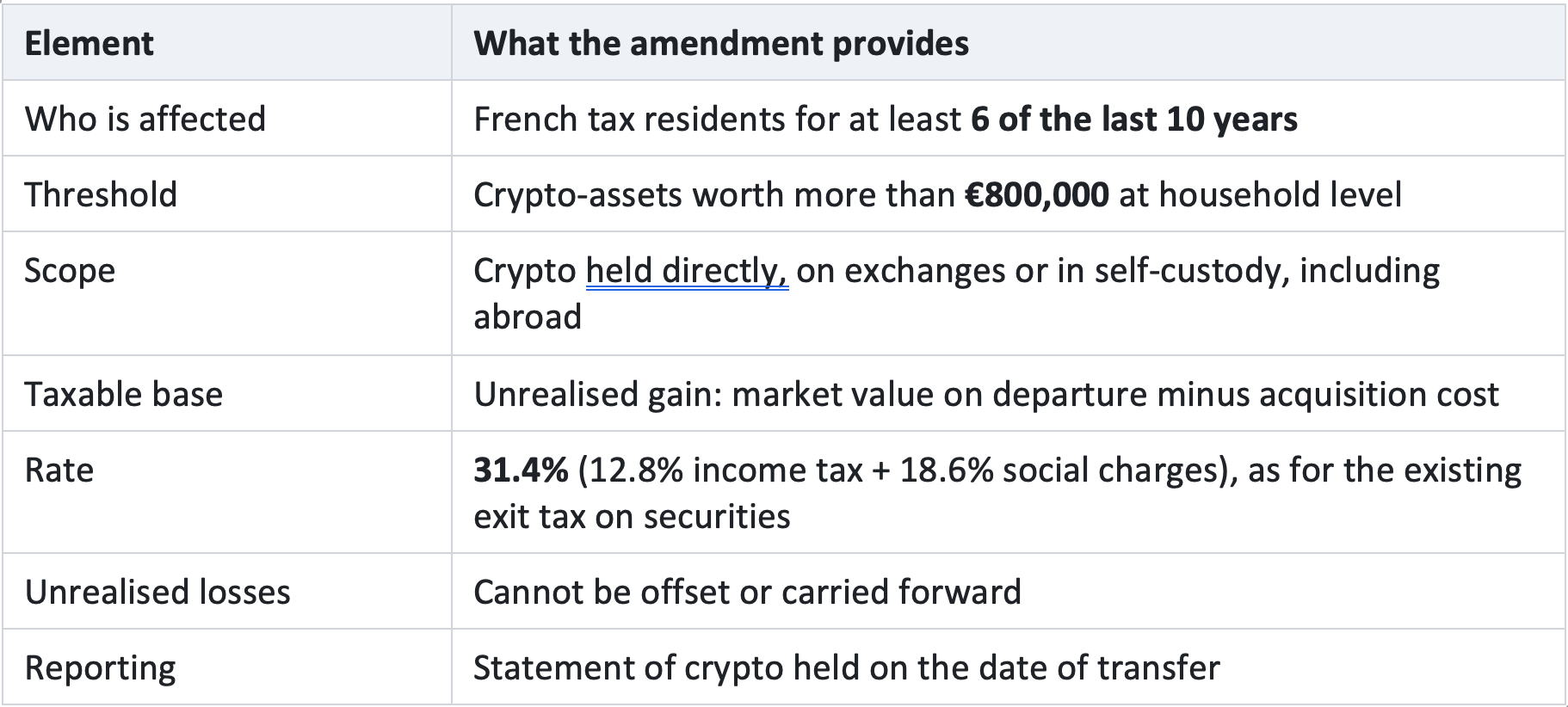
The measure would apply to anyone moving their tax domicile out of France from 1 January 2027. The key parameters:
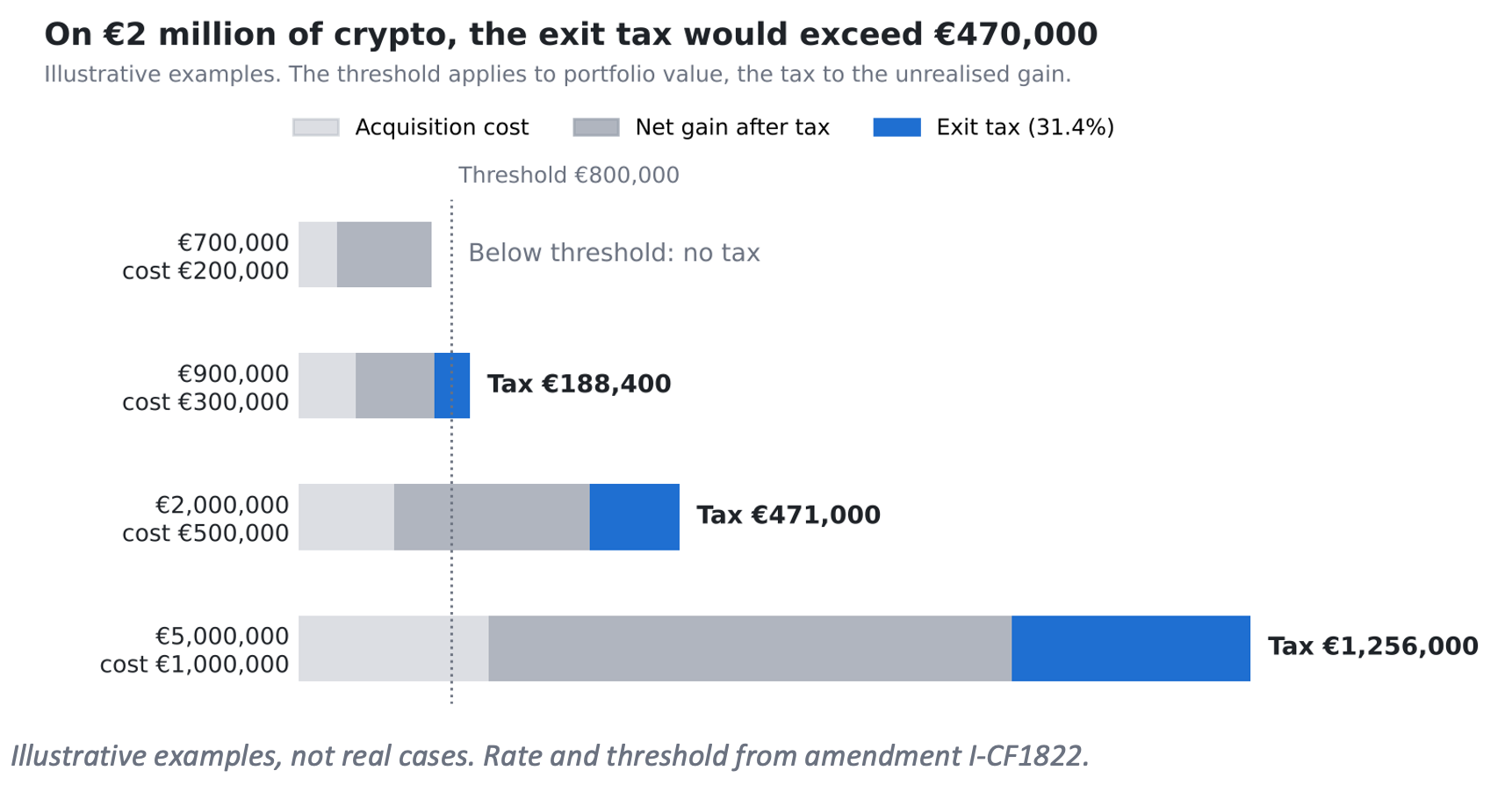
The tax is not charged on the whole portfolio, only on the gain. The €800,000 threshold, however, is measured on the total value of the crypto, not on the gain.
The mechanism mirrors the existing regime for securities, including deferral of payment and relief on return, death or gift. The tax is therefore not always payable immediately, but the reporting obligation applies regardless. Whether deferral is automatic or requires guarantees also depends on the destination country: this should be checked case by case with a French tax adviser.
Where the legislative process stands
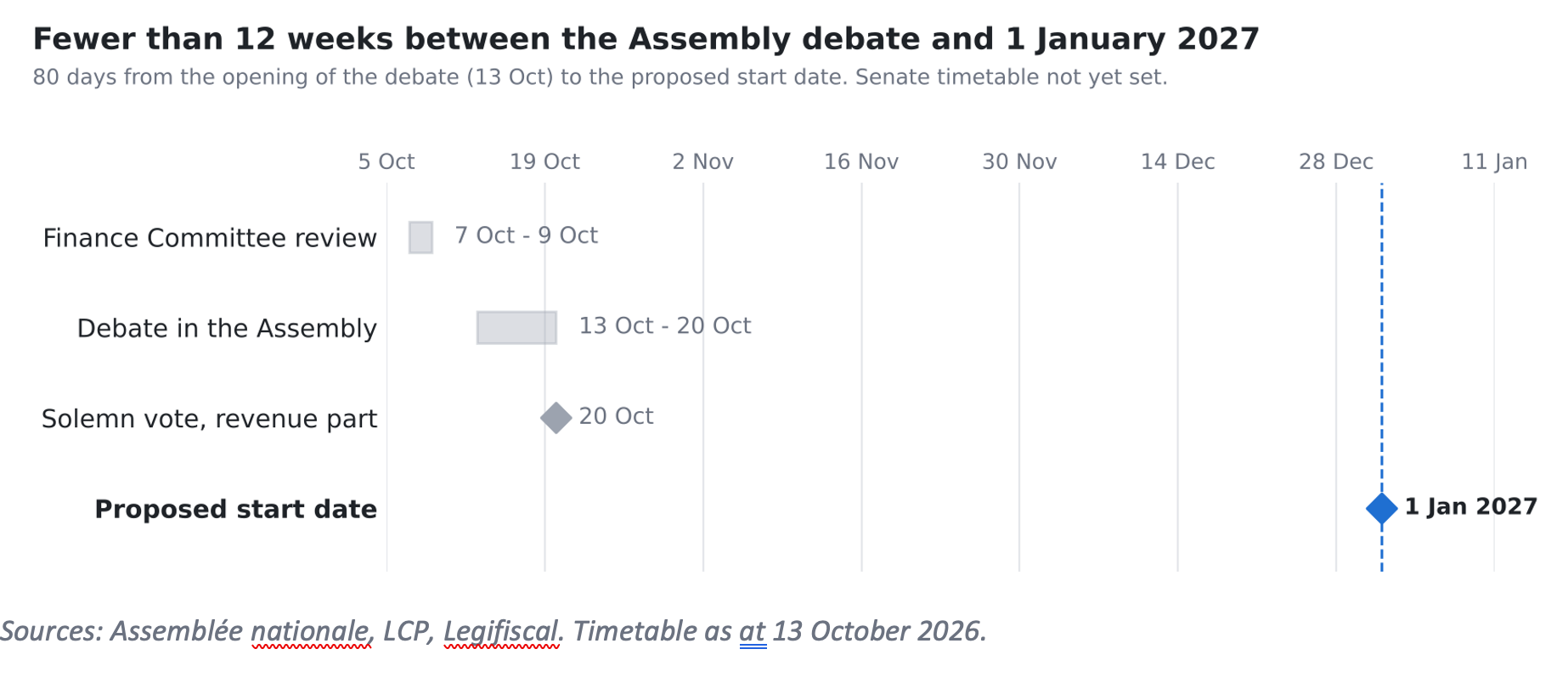
The Committee approved the amendment on 8 October, but the following day it rejected the entire first part of the 2027 budget, which covers revenue. The Assembly is therefore debating the government’s original text: the amendment must be tabled and voted on again, and then go to the Senate. The text could still change or be rejected.
If it passes, anyone with a significant crypto portfolio would have only a few weeks to organise a genuine, well-documented change of tax residence. And the mere fact that it is being seriously discussed already creates pressure and uncertainty.
Illustrative examples, not real cases. Rate and threshold from amendment I-CF1822.
Below €800,000 of total value, the tax does not apply. Above the threshold, 31.4% is charged on the entire unrealised gain, even if the crypto is never sold. For early buyers the bill can be substantial: in these examples, between 20% and 25% of the portfolio value.
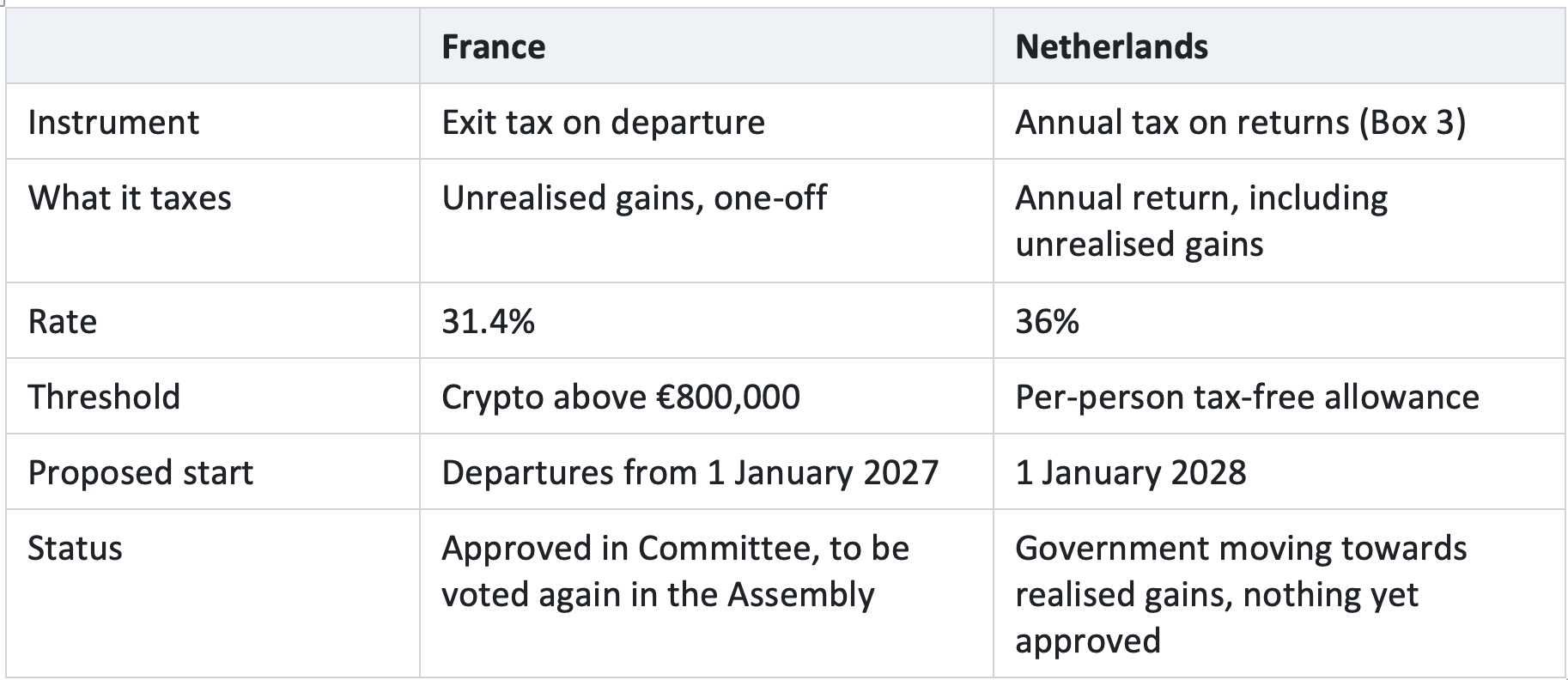
Not an isolated case: the Netherlands tried too
In February 2026, the Dutch lower house approved an even more aggressive Box 3 reform: from 2028, the actual annual return, including unrealised gains on crypto, would have been taxed at 36%. After strong criticism, the government backtracked. On 29 September 2026 it announced an accelerated move towards taxing realised gains only, which still needs parliamentary approval.
The message is the same: several European countries are looking with growing interest at gains that exist only on paper.
Why a second residency outside Europe can become strategic
In this context, having a second residency already in place in a non-EU country is not a luxury but a tool for flexibility. A residence permit alone is not enough: you need a structure that allows you, if necessary, to trigger a genuine change of tax residence quickly.
Changing tax residence is not just about getting on a plane. You need to move your centre of vital interests: main home, family ties, economic activity. The French tax authorities take a strict view of “paper emigration”.
Those who already have residency in place (documents, address, minimum ties) can react far more quickly and focus on the substance of the move. Those starting from scratch (visa, housing, banking, evidence of ties) risk running out of time.
A word of caution: a second residency on its own does not end French, Dutch or any other tax residence. And if the measure passes as drafted, the exit tax would apply to anyone leaving from 2027, whatever the destination. Having a concrete, ready-to-use option is the difference between being able to plan and being forced to rush.
The Paraguay Advantage: A Strategic Plan B Beyond Europe
Paraguay is emerging as an attractive destination for internationally mobile individuals, entrepreneurs and investors seeking greater flexibility, financial diversification and long-term security.
One of its key advantages is its territorial tax system, under which foreign-source income is generally not subject to local income taxation.
Beyond taxation, Paraguay offers relatively accessible residency pathways, affordable living costs and opportunities to establish a genuine presence through property ownership, banking relationships and business activities.
For European residents, obtaining Paraguayan residency can be a valuable first step towards building a Plan B outside the European Union. Rather than waiting for regulatory or fiscal conditions to change, individuals can establish an alternative residency option in advance, preserving greater freedom to decide where to live, work and invest.
For those considering a future relocation, having residency arrangements already in place can simplify the transition towards establishing effective tax residence abroad, subject to the applicable requirements.
The JURIS Global Perspective
The French crypto exit tax proposal is still under discussion, but the fact that it has come this far in Parliament should give pause for thought. The wind is changing in Europe: unrealised gains and digital portfolios are increasingly on legislators’ radar.
For those with significant capital in crypto, geographical diversification of residence is no longer just a matter of lifestyle or long-term tax planning. It has become a form of risk management. Having a structured plan B, such as residency in Paraguay or another non-EU jurisdiction, means not having to make decisions under pressure.
As always, every situation is personal. Anyone who may be affected would do well to assess their tax position and practical relocation options early, with the support of qualified professionals.
Disclaimer
This article is for informational purposes only and does not constitute legal, tax or financial advice. The French exit tax proposal on cryptocurrency discussed herein is currently under parliamentary review and is not yet law. Tax rules, residency requirements and their interpretation can change and vary according to individual circumstances. Readers should seek independent professional advice from a qualified tax adviser and legal counsel in the relevant jurisdictions before making any decisions regarding residency, asset relocation or tax planning. The mention of Paraguay or any other country as a possible second residency option is purely illustrative and does not constitute a recommendation.
Your next step
Speak to an adviser
Tell us what you need. The JURIS team will review your enquiry and help you find the right support.