🇦🇬 🇩🇲 🇬🇩 🇰🇳 🇱🇨 🇪🇺 Caribbean Citizenship by Investment: The Schengen Ultimatum and Why Timing Matters
Five Caribbean nations face a critical EU deadline that could reshape the future of Citizenship by Investment. With Schengen visa-free access potentially at risk, what happens to existing applications, passport values and future investors? JURIS Global explores why timing matters and how real estate investment could offer an additional layer of financial protection.
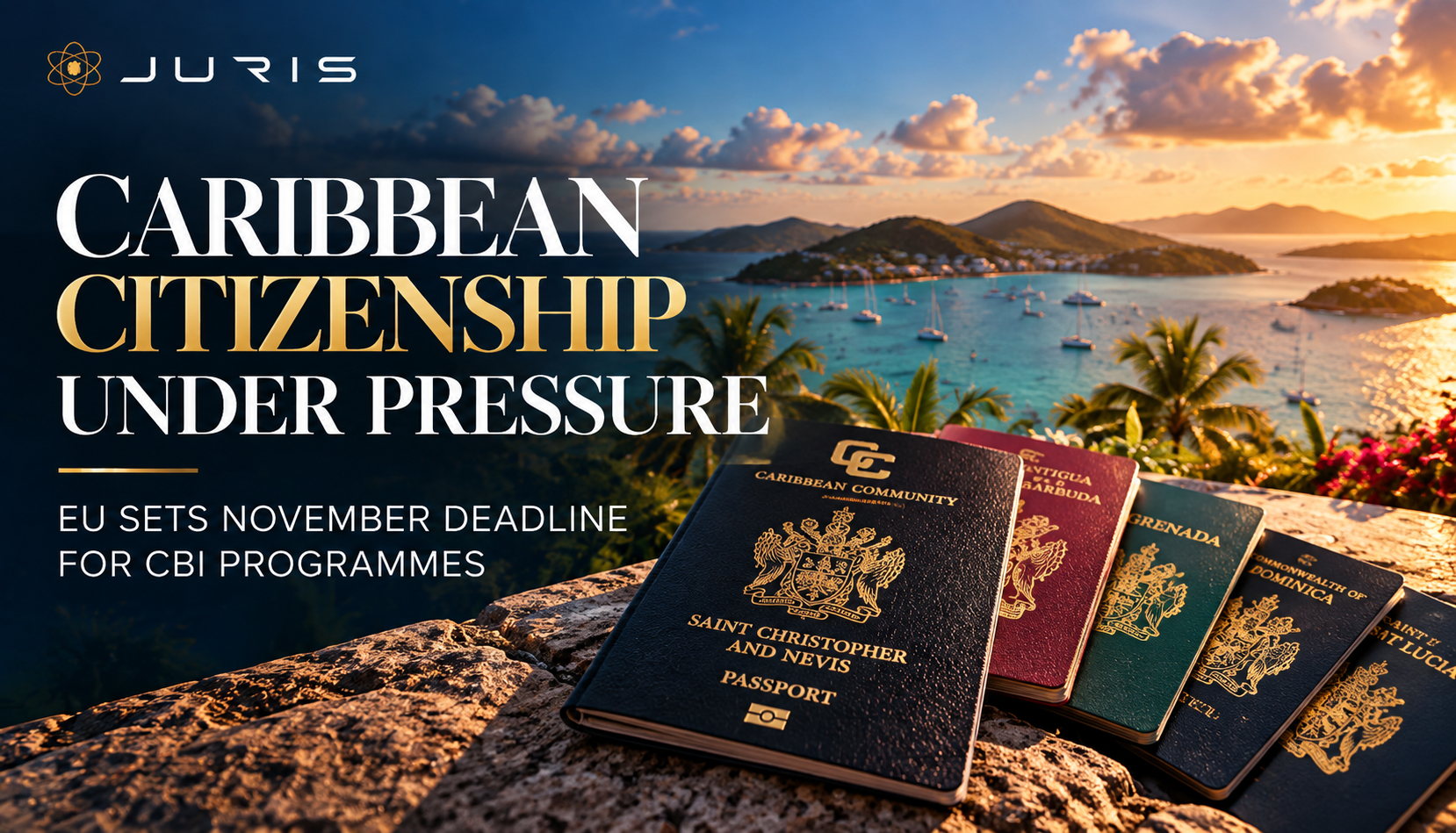
The future of Caribbean Citizenship by Investment (CBI) programmes may be approaching a defining moment.
Five Caribbean nations, 🇦🇬 Antigua & Barbuda, 🇩🇲 Dominica, 🇬🇩 Grenada, 🇰🇳 St. Kitts & Nevis and 🇱🇨 St. Lucia, are reportedly facing a 12 November 2026 deadline to commit to suspending their CBI programmes or risk losing visa-free access to Europe's Schengen Area.
The European Commission has reportedly called for these programmes to be phased out by June 2028, raising important questions for both existing passport holders and prospective investors.
What Happens to Existing Applications?
There is currently no official confirmation that applications already submitted would be cancelled.
Existing citizenships would not automatically be revoked, while pending applications may benefit from transitional arrangements. However, the treatment of applications under review has yet to be clarified.
The distinction between suspending new applications and terminating existing processes will be crucial.
Could Real Estate Be a Smarter Investment Route?
If Caribbean passports lose Schengen visa-free access, their perceived value could decline, particularly for investors whose primary objective is international mobility.
This introduces an important consideration when choosing between donation-based and real estate investment routes.
A donation is a non-recoverable contribution. A qualifying real estate investment, by contrast, provides ownership of an underlying asset that may retain independent economic value.